What are Spongy Brakes and How to Fix it?
Press the brake pedal on your car, and the friction between brake pads or shoes and the harder surface of the rotor or drum causes your car to slow down. But when your brakes aren’t working properly, you might not be able to decelerate as smoothly, predictably, or safely as you would expect. One of the symptoms you might experience is a spongy brake pedal, and it can be disconcerting.
The reason for spongy brakes isn’t always the same, and you’ll need to figure out what the precise cause is. For some, it could be a simple fix that only takes a short time and no financial expense. For others, there could be parts that need to be replaced, and the parts and labor together could be over $1,000. Learn what the term ‘spongy brakes’ means, common signs, and how to diagnose the problem and prevent it from happening.
Understanding Spongy Brakes
When someone mentions spongy brakes, it can mean that they’re experiencing one or more of a handful of symptoms, which we’ll discuss shortly. The reason is typically because there is air in the brake system, or possibly because there is moisture present inside the hydraulic brake system.
For the brakes to work as you expect them to, the brake fluid must compress into the lines at the rate it’s designed to. When there’s air present, it compresses much more readily, meaning your brake pedal has to travel further before it effectively presses pads against the rotors. And when there’s moisture present, it can boil in the lines under pressure, and the resulting air bubbles cause the same effect.
Air only gets into a brake system when there’s an entry point that shouldn’t be there, such as a leak at a brake hose, caliper, or master brake cylinder. Moisture, on the other hand, is more common since brake fluid is hygroscopic, and any exposure to the humidity-containing air will result in the brake fluid absorbing some.
Common Signs of Spongy Brakes
Spongy brakes can exhibit several symptoms that indicate there might be air or moisture in the brake system. If you experience any of the following issues, it’s a sign that your brakes might be spongy:
- Soft brake pedal. The brake pedal feels soft and lacks the firmness you’re accustomed to. You might need to press the pedal further than usual before the brakes engage.
- Increased pedal travel. You notice that the brake pedal is going to the floor before you feel the brakes responding. This extended travel can be an indication of air or moisture in the brake lines.
- Poor braking performance. Spongy brakes can lead to decreased braking power. Your vehicle might take longer to come to a complete stop or require more effort on the brake pedal to achieve the desired braking effect.
- Inconsistent braking. If the brake pedal feels inconsistent, meaning the pressure required to engage the brakes changes erratically, it could be due to air in the system affecting the hydraulic pressure distribution.
- Brake fade. Brake fade occurs when the brakes lose their effectiveness after prolonged or heavy braking. Spongy brakes can contribute to brake fade because the air in the system can cause the brake fluid to heat up and reduce its ability to transmit pressure effectively.
- Brake warning light. Some vehicles have a brake warning light on the dashboard that might illuminate if there’s an issue with the brake system, including spongy brakes. If this light comes on, it’s essential to have your brakes inspected as soon as possible.
- Noise and vibration. Spongy brakes might also be accompanied by unusual noises, such as squealing or grinding, when applying the brakes, or vibrations in the brake pedal.
Diagnosing Spongy Brakes
Diagnosing a spongy brake pedal involves a systematic process to identify the underlying issue causing the problem. Here’s a guide to help you diagnose a spongy brake pedal:
- Visual inspection. Start by inspecting the brake system visually. Look for any signs of brake fluid leaks around the brake lines, calipers, wheel cylinders, and the master cylinder. Check for wet spots, rust, or dampness, which could indicate a leak, and check the brake fluid level as well.
- Inspect brake lines and hoses. Inspect the brake lines and hoses for any visible damage, such as kinks, bends, or cracks. Damaged lines can cause fluid leaks or air to enter the system.
- Check brake fluid condition. If it appears dark, discolored, or contaminated, it might need to be replaced. Fresh brake fluid should be clear or slightly amber in color.
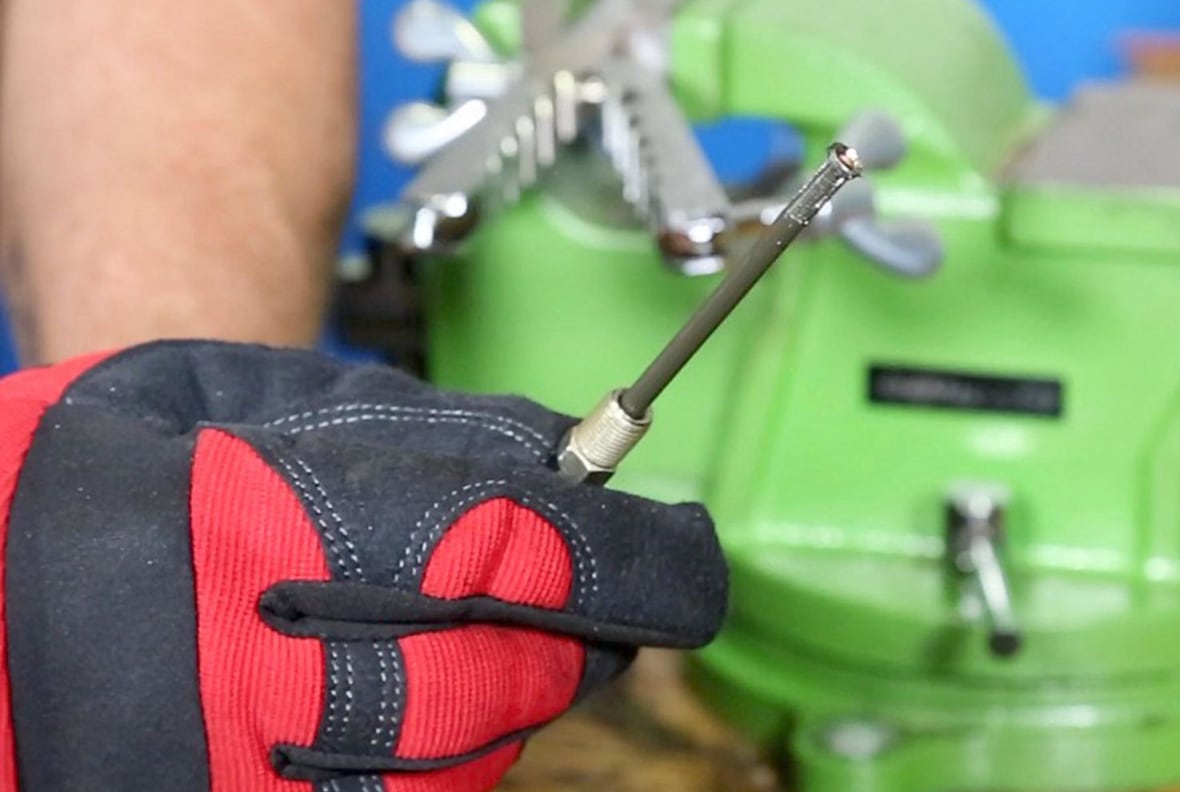
- Bleed the brakes. Properly bleed the brake system to remove air. This involves using a brake bleeder kit to purge air from the brake lines. Follow the manufacturer’s recommended bleeding procedure for your specific vehicle.
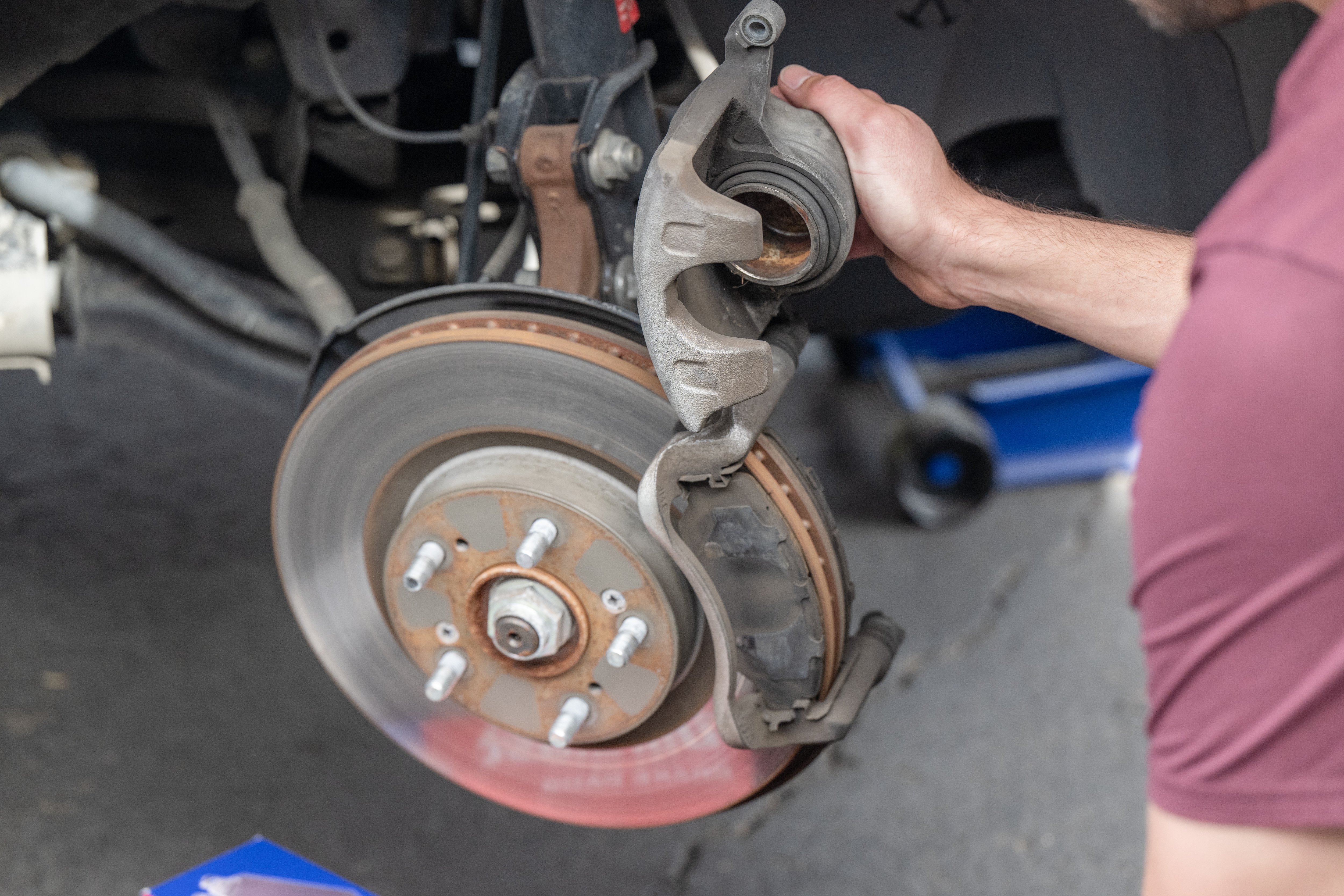
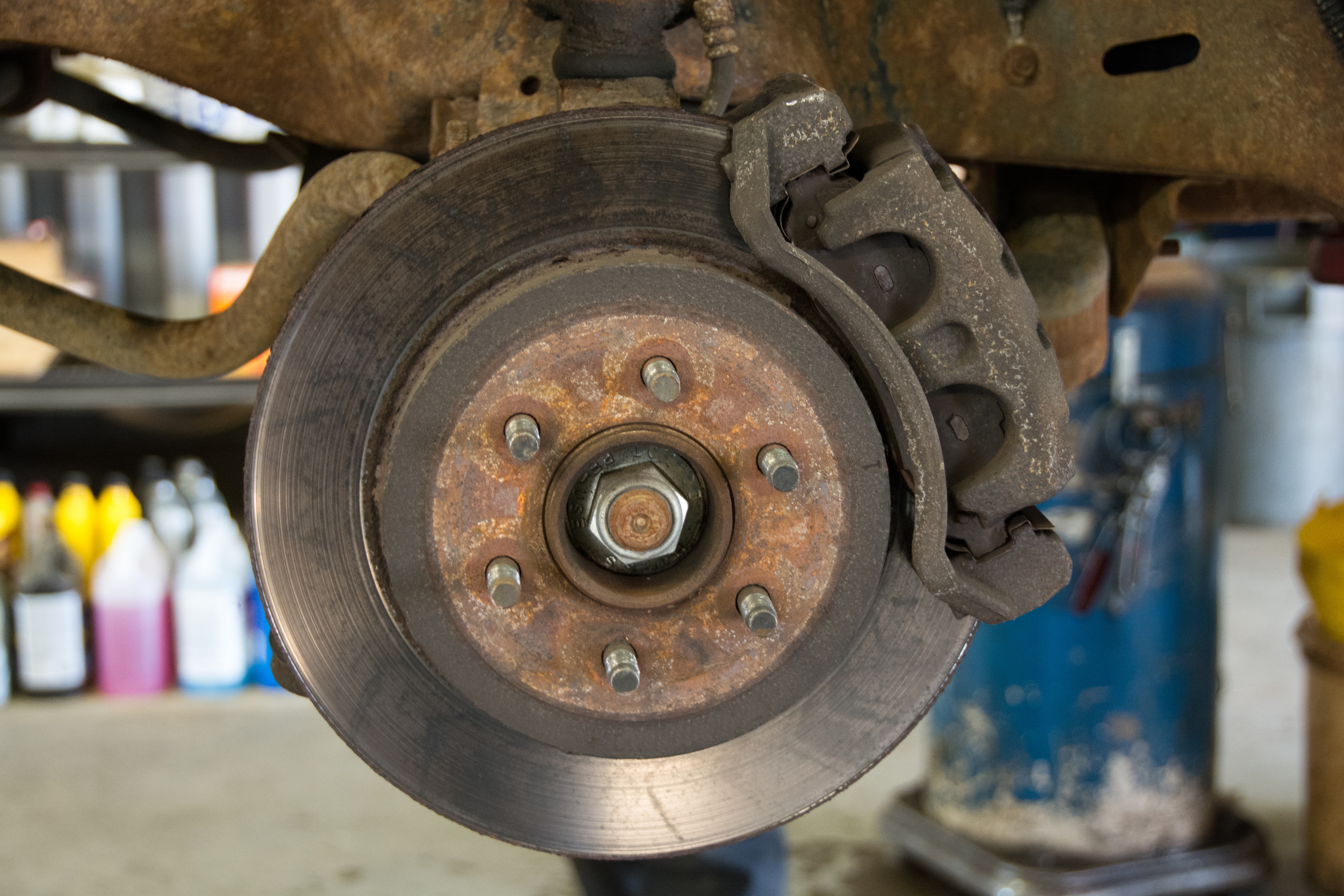
- Check brake components. Check the condition of brake pads, rotors, calipers, and wheel cylinders as well as the master cylinder. Worn-out or damaged components can affect brake performance or let air into the system.
- Change the brake fluid. If the brake fluid appears contaminated or has absorbed moisture, it’s advisable to perform a brake fluid flush to replace the old fluid with fresh fluid.
- Pressure test the brakes. A pressure test of the brake system can help identify weak points or expose leaks.
Seeking Professional Help
Sometimes, specialized equipment may be necessary to find the fault in your braking system. Or, after trying to diagnose it yourself, you might still be feeling a spongy brake pedal. The brakes are a safety system, and if you’re either unable to find the problem or fix it yourself, have a professional mechanic check it for you. Seek out one of our Preferred Shops to help you do the job. Once it’s diagnosed, you have the option to have them fix it for you with parts you supply, or repair it on your own.
Preventive Maintenance
Like many other systems, preventing a spongy pedal comes down to routine maintenance in many cases. Contaminated brake fluid is a leading cause, and moisture or the wrong type of fluid can damage the interior of brake components. Always use the correct brake fluid for your vehicle. And when you detect moisture in the system, whether by testing for moisture content or seeing a visual change in the color or consistency, change or flush the brake fluid from the complete system. You could save yourself hundreds in repairs, or even more.
When you need brake parts for your car, shop at AutoZone. You’ll always find premium parts and fluids from brands you trust, along with trustworthy advice.
FAQ/People Also Ask
Related Posts