How Does the Car Ignition System Work?
For internal combustion engines, the air-fuel mixture that funnels into the cylinders doesn’t do any good unless it ignites, producing the power to force the piston down in the cylinder. It’s the role of the ignition system to make it happen. The process is precise and complex, and it requires many different parts to operate.
Learn about what the ignition system includes, what makes it tick, and how to troubleshoot it if something goes wrong.
Introduction to Car Ignition Systems
At the heart of every car’s power lies a crucial system often taken for granted: the ignition system. It serves as the catalyst for the entire combustion process, igniting the fuel-air mixture that generates power to propel your vehicle forward. A small yet powerful spark ignites the mixture in the cylinders, timed exactly to generate the most downward force possible on the piston, forcing the crankshaft to rotate. It’s made up primarily of electrical components.
Ignition systems have been evolving over the generations, adapting to the changing landscape of automotive technology. From rudimentary systems to advanced electronic setups, the ignition system has transformed to meet the demands of modern engines. Older systems were mechanically driven to time the spark needed, then as electrical advancements occurred, sensors and modules became the predominant methods used.
Key Components of a Car Ignition System
For gas-powered engines, there are a few key components that are required to deliver the spark to the cylinders:
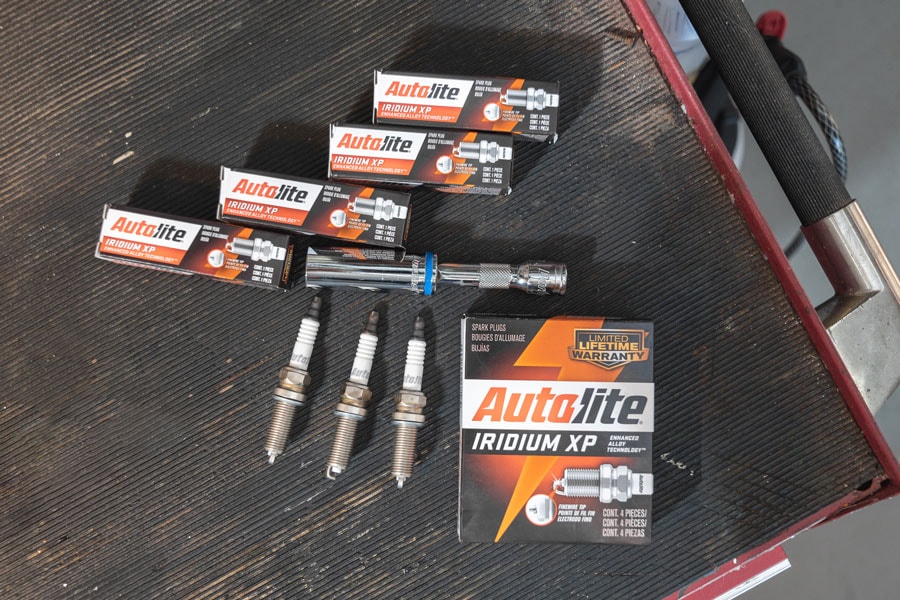
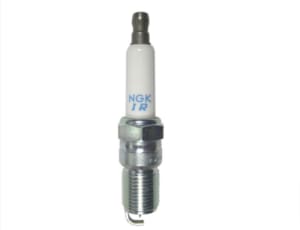
- Spark plugs – Among the primary players in the ignition system orchestra are spark plugs. These small yet mighty devices ignite the fuel-air mixture within the engine cylinders. Spark plugs generate a spark that initiates combustion, converting potential energy into kinetic power.
- Distributor – Delivering, or distributing, the electrical charge to the spark plugs is the role of a distributor. It’s driven off of a gear at the front of the engine to maintain the timing.
- Spark plug wires – Low-resistance cables connect the distributor to the spark plugs, transferring the energy needed for the spark.
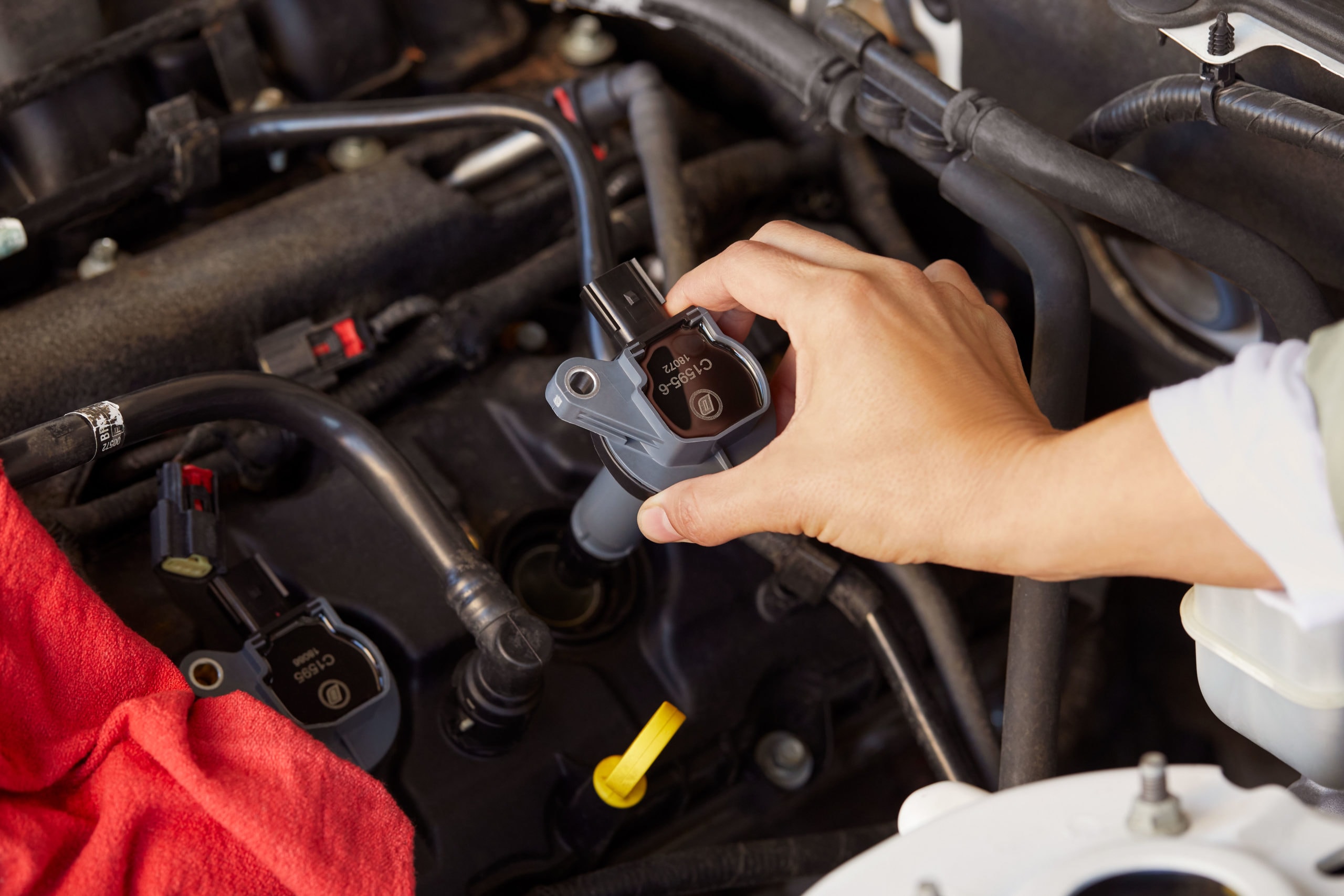
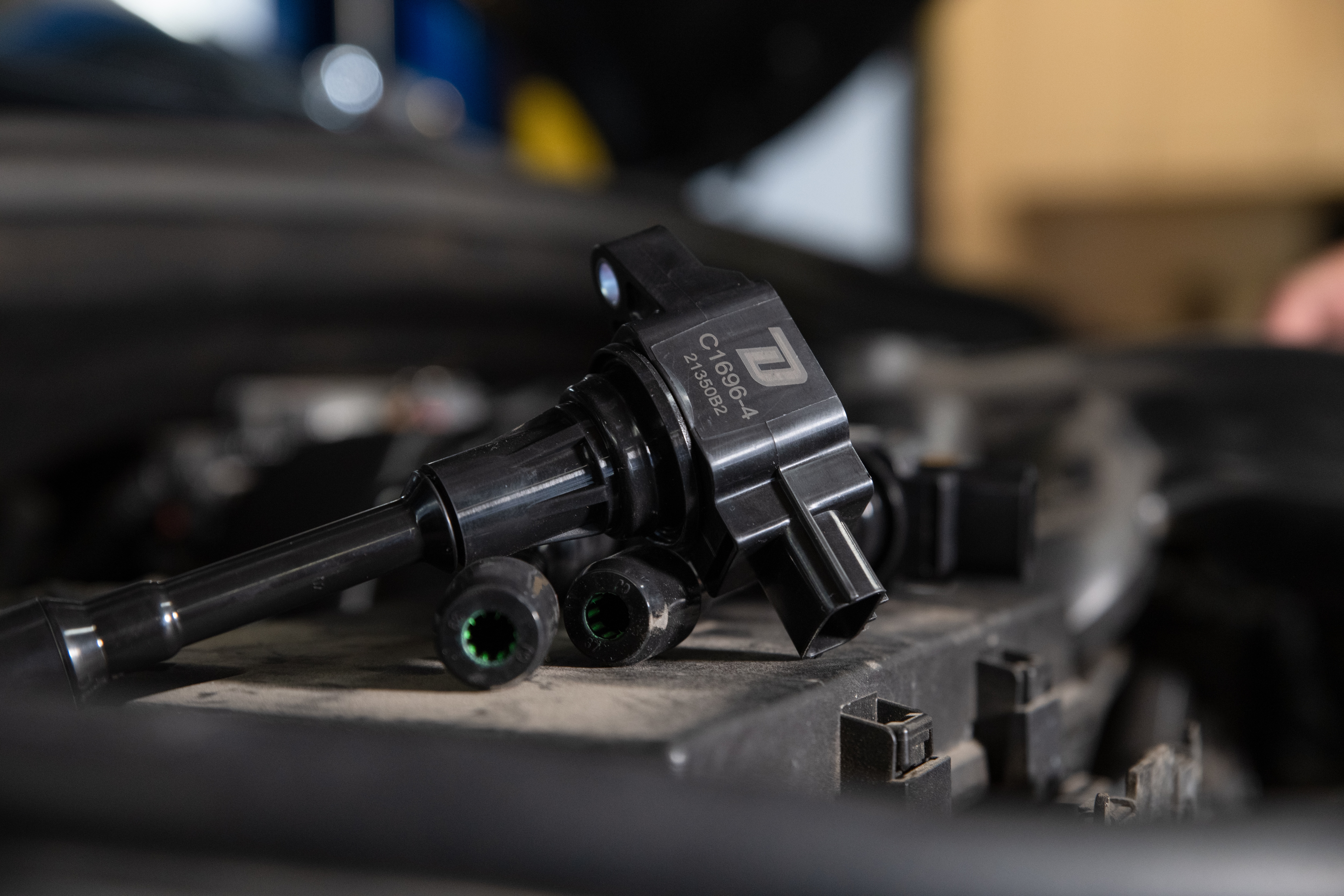
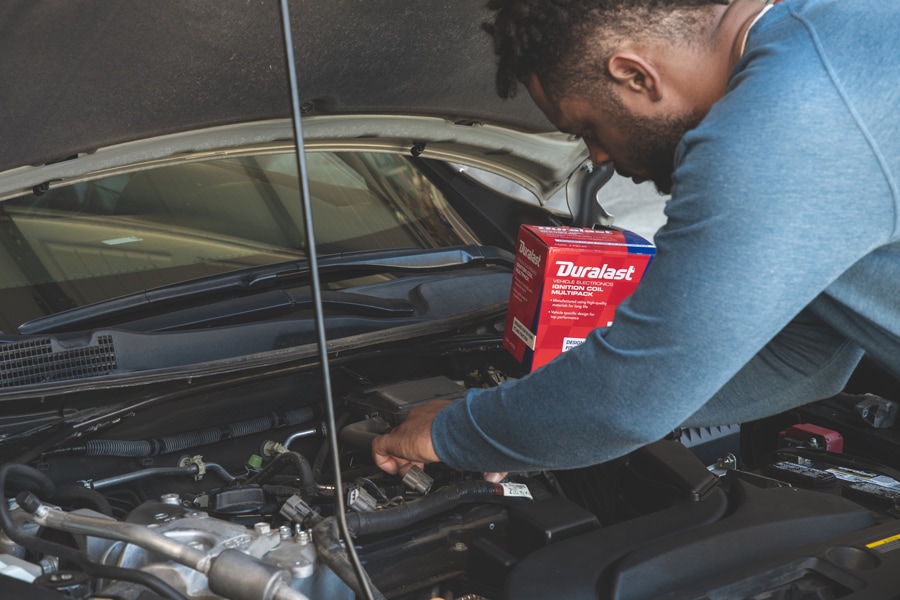
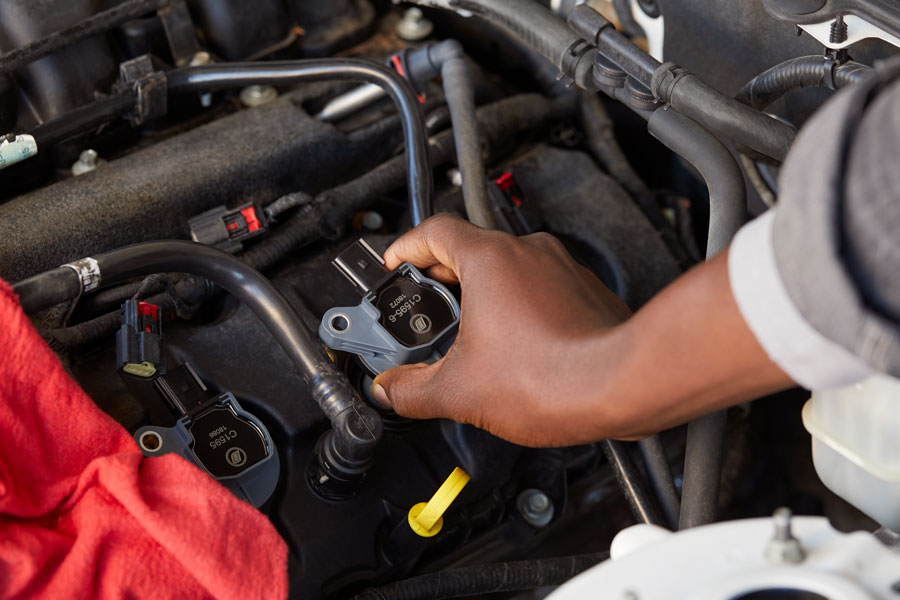
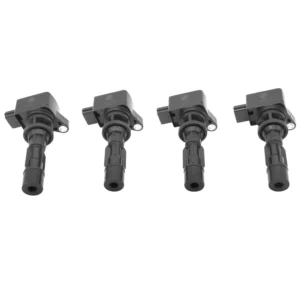
- Ignition coils – On distributorless ignitions, accounting for all modern cars, ignition coils store a low current and convert it to a powerful high voltage the spark plug needs to ignite the air-fuel mixture.
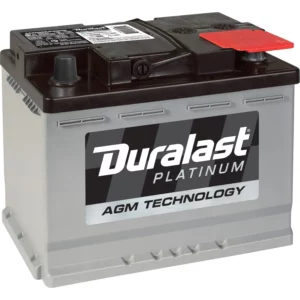
In electronic ignition systems, the engine control unit (ECU) establishes the timing electronically, able to be more precise and more easily adapted than with a mechanical distributor. Other parts that contribute to a smooth-operating ignition system include the battery, ignition switch, and on diesel engines, the glow plugs.
Types of Car Ignition Systems
There are several different designs of ignition systems used by manufacturers, whether current or historical. No matter what they’re called by the carmaker, it falls into these four types.
Distributor Ignition System
The distributor ignition system, also known as a conventional ignition system, is one of the oldest types of ignition systems in vehicles. It consists of a distributor, mechanical points, ignition coil, and spark plugs. The distributor’s primary function is to distribute high-voltage electricity from the ignition coil to the spark plugs in the correct firing order. The spark then ignites the air-fuel mixture in the engine’s cylinders. This type of ignition system is found in older model vehicles.
Electronic Ignition System (EI)
In the 1970s, the electronic ignition system replaced the traditional mechanical points in many vehicles. This system uses solid-state electronics and a magnetic pickup located in the distributor. The pickup generates a signal that is sent to the ignition control module, which turns the ignition coil on and off. The main advantage of the electronic ignition system is that it eliminates the need for frequent maintenance like the replacement of points and condensers.
Distributorless Ignition System (DIS)
As the name implies, the distributorless ignition system eliminates the need for a distributor. Instead, it uses multiple ignition coils. Each of these coils serves two spark plugs simultaneously. When one plug is in the compression stroke, the other is in the exhaust stroke, meaning only one spark plug is ignited at a time. DIS improves ignition timing accuracy, reduces high-tension wiring, and enhances overall vehicle performance.
Coil-On-Plug Ignition System
The coil-on-plug ignition system is the newest and most advanced type of ignition system. Each cylinder has its own ignition coil that sits directly on top of the spark plug. This design eliminates the need for spark plug wires, resulting in a more efficient transfer of the spark. The coil-on-plug system offers better fuel economy, increased power, and quicker starts.
Troubleshooting and Maintenance Tips
Even the most advanced systems encounter issues over time. Recognizing common ignition system problems helps car owners to address issues promptly, preventing potential damage.
- If your car won’t start, it could be due to a variety of reasons, including problems with the battery, starter motor, or the ignition switch. If the engine does not crank and the accessories (lights, radio) do not work, the ignition switch might be faulty.
- An engine misfire could be due to faulty spark plugs or ignition coils. Inspect the spark plugs. Look for any signs of wear or damage. If they’re old or worn out, replace them. Test the ignition coils with a multimeter. If the resistance readings are outside the manufacturer’s specifications, the coil might need replacement.
- Stalling while driving could be due to a problem with the ignition module. Use an ohmmeter to test the module’s resistance. If the resistance is outside the manufacturer’s specifications, the module might be defective.
- Poor fuel economy could be due to a problem with the ignition timing. Use a timing light to ensure the ignition timing is set correctly. If it’s not, adjust it according to the manufacturer’s specifications, or scan for codes to determine if there’s a sensor that isn’t reading correctly.
Routine maintenance plays a vital role in ensuring your car’s ignition system operates at peak efficiency. Simple tasks like inspecting and cleaning spark plugs and checking ignition coils for deterioration can go a long way in preventing issues. Maintenance saves you money in the long run.
At AutoZone, you’ll find ignition parts to service or repair your car, no matter which style your vehicle has. Shop from top brands like Duralast and get your order in a flash with convenient options like Free Same Day Pickup.
FAQ/People Also Ask
Related Posts